
What Does CBG Do? (and How Does It Work in Your Body)
11 min read
CBG, or cannabigerol, is a non-psychoactive cannabinoid found in cannabis plants that interacts with your body’s endocannabinoid system to potentially influence inflammation, neurological function, and cellular stress, without producing the intoxication associated with THC. While it’s often called the “mother cannabinoid” because other cannabinoids like CBD and THC derive from its acidic precursor (CBGA), CBG itself remains one of the least understood compounds in cannabis, even as its popularity in vape products and wellness formulations continues to surge.
If you’ve been hearing more about CBG lately and wondering whether it lives up to the hype, you’re asking the right questions. The science is genuinely promising but still early. Preclinical studies show CBG binding to CB1 and CB2 receptors, as well as interacting with serotonin receptors, TRP channels, and other targets that regulate pain, mood, and inflammation. What’s missing? Robust human trials. Most of what we know comes from lab and animal research, which means the leap to your vape session requires a healthy dose of curiosity paired with realistic expectations.
This article breaks down what CBG actually does in your body, how it differs from CBD and THC, and what the current evidence suggests about its effects. We’ll explore the mechanisms at play, the types of products you might encounter, and how vapers are incorporating CBG into their routines, all while keeping the conversation grounded in what science can and can’t yet confirm.
What CBG Is (and What It Isn’t)
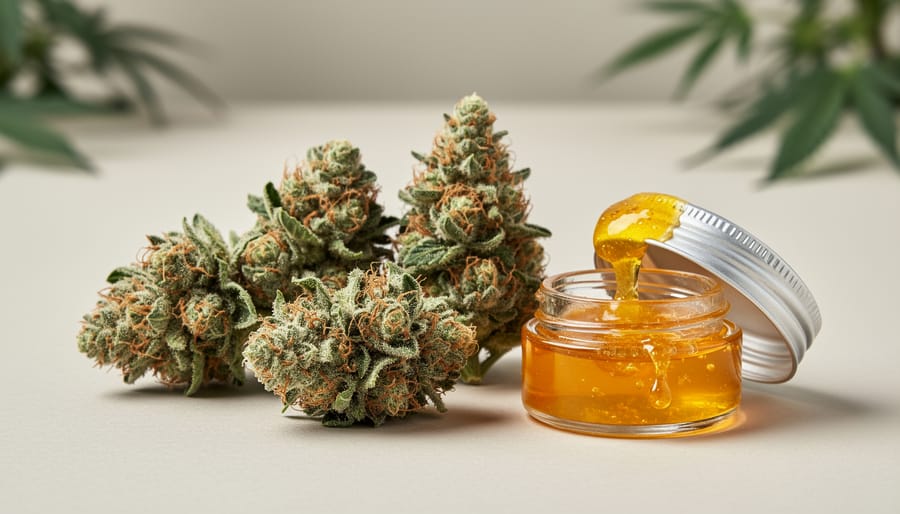
Cannabigerol, or CBG, is a naturally occurring compound in cannabis plants that belongs to a class of molecules called cannabinoids. Unlike THC, CBG is non-psychoactive meaning it won’t get you high or alter your mental state when you consume it. Think of it as CBD’s lesser-known cousin: both offer potential benefits without the intoxication, but they work through different pathways in your body.
- CBG (Cannabigerol)
- A non-psychoactive cannabinoid found in cannabis plants, typically in low concentrations, that interacts with the body’s endocannabinoid system without causing intoxication.
- CBGA (Cannabigerolic Acid)
- The acidic precursor form of CBG that exists in living cannabis plants and converts to CBG through heat or time.
- Non-psychoactive
- A substance that does not produce mind-altering effects, changes in perception, or a “high” when consumed.
- Cannabinoid
- A class of chemical compounds that interact with cannabinoid receptors in the body, found naturally in cannabis plants or produced by the human body.
Here’s where CBG gets interesting: it’s often called the “mother cannabinoid” because CBGA, its acidic form, is the chemical starting point for THC, CBD, and CBC. As a cannabis plant matures, enzymes convert CBGA into these other cannabinoids, which is why CBG typically shows up in very low concentrations in mature plants, usually under 1%. Most of the CBGA gets transformed into something else before harvest.
What sets CBG apart from the cannabinoids you’re probably familiar with isn’t just its rarity. While THC binds strongly to CB1 receptors in your brain (creating that psychoactive effect) and CBD works more indirectly, CBG takes a different approach entirely. It interacts with multiple receptor systems beyond the endocannabinoid system, which we’ll explore in the next section. For now, just know that CBG operates through its own distinct mechanisms, making it neither a THC replacement nor simply “another CBD.”
How CBG Interacts with Your Body

The Endocannabinoid System Connection
If you’ve vaped THC or CBD, you already have a mental map of the endocannabinoid system, CBG just interacts with it differently. Unlike THC, which latches firmly onto CB1 receptors in your brain and produces that familiar high, CBG has a weaker affinity for these same receptors. It binds there, but loosely, like a casual handshake instead of a firm grip. This is why CBG doesn’t cause intoxication.
CBG also connects with CB2 receptors, which are concentrated in your immune system and peripheral tissues. Think of CB2 as the body’s backstage crew, less about mood or perception, more about inflammation and immune response. Because CBG engages both CB1 and CB2 without the psychoactive punch of THC, it occupies an interesting middle ground.
What makes this interaction particularly intriguing for vapers is that CBG can coexist with other cannabinoids in full-spectrum products without competing for the spotlight. You’re getting a cannabinoid that whispers to your endocannabinoid system rather than shouting, which opens up possibilities for balanced, functional effects that won’t interfere with your day.
Beyond the Endocannabinoid System
CBG doesn’t stop at the endocannabinoid system. It also acts on several other receptor types throughout your body, which helps explain why researchers find it so interesting.
Think of TRP channels as your body’s sensors for temperature, pain, and inflammation. CBG interacts with these channels, potentially influencing how you experience discomfort and how your body responds to irritation. It’s like adjusting multiple dials instead of just one.
CBG also engages with PPAR nuclear receptors, which sit inside your cells and regulate how genes related to inflammation and metabolism get expressed. This is a fundamentally different mechanism than what happens at the CB receptors we covered earlier. You’re working at the genetic level here, not just at cell surface receptors.
Then there’s serotonin and adrenergic receptors. CBG’s interaction with serotonin receptors connects it to mood and digestion pathways, while adrenergic receptor activity ties into stress response and cardiovascular function. These aren’t the primary targets for CBG, but they contribute to the overall picture.
Why does this multi-target approach matter? Because biological problems are rarely simple. Inflammation, for instance, involves multiple pathways and feedback loops. A compound that touches several different systems might address a problem from multiple angles rather than just one. That’s the theoretical appeal, anyway.
This broader receptor activity is what sets CBG apart from more selective cannabinoids. It’s not necessarily better, just different, and it helps explain why researchers are exploring such diverse applications in preclinical studies.
What the Research Shows So Far

Here’s what the current science tells us about CBG, and it’s crucial to understand which pieces come from actual human studies versus laboratory research.
Most of the compelling CBG research right now comes from preclinical studies, that means experiments conducted in cell cultures or animal models, not human clinical trials. These studies have shown some genuinely interesting results. In laboratory settings, CBG has demonstrated an ability to reduce oxidative stress, which is basically your cells’ version of rust damage. Researchers have also observed CBG modulating inflammatory signaling pathways, potentially dialing down the cascade of inflammatory responses at the cellular level. Perhaps most intriguingly, some neurodegeneration models have shown CBG protecting neurons from damage, which has caught the attention of scientists studying conditions like Huntington’s disease and other neurodegenerative disorders.
But here’s where we need to pump the brakes. Human research on CBG is still in its infancy. The gap between what happens in a lab dish and what happens in your body is enormous. I spoke with Dr. Sarah Chen, a cannabinoid researcher at a West Coast university, who put it bluntly: “The preclinical data on CBG is promising, absolutely. But we’ve seen countless compounds look amazing in cell studies and then fail to show meaningful effects in humans. CBG needs the same rigorous clinical testing we’ve given CBD and THC before we can make confident statements about therapeutic applications.”
The challenge partly comes down to resources and regulations. Conducting human trials on cannabinoids requires navigating complex legal frameworks, securing funding, and going through years of testing phases. Lab testing for cannabinoid content and safety is well established, but that’s different from clinical efficacy trials in human populations.
Right now, in 2026, we have maybe a handful of small human studies published on CBG, compared to hundreds of preclinical investigations. That doesn’t mean CBG doesn’t work, it means we don’t yet have the data quality we need to say definitively what it does in human bodies at what doses and for which specific conditions. The science is promising but incomplete, and anyone telling you otherwise is getting ahead of the evidence.
CBG’s Potential Benefits (What We Know and Don’t Know)
I’ve spent the last few years watching CBG shift from a cannabinoid barely mentioned in vape shops to something medicinal users actively seek out. The conversations I overhear at cannabis events have changed, people aren’t just asking “what does CBG do” anymore, they’re sharing personal experiments and swapping notes on which conditions they’re exploring it for. That enthusiasm is understandable given the preclinical findings, but it’s worth slowing down to separate what the science actually supports from what remains hopeful speculation.
The preclinical research points to three main areas where CBG shows promise. First, inflammation. CBG’s interaction with CB2 receptors and PPAR nuclear receptors suggests it may help modulate inflammatory signaling pathways, which is why some medicinal cannabis users report experimenting with it for inflammatory conditions. The mechanism makes biological sense, but we’re still waiting for human trials to confirm whether these lab findings translate to real-world relief.
Neuroprotection is another area drawing attention. Animal studies indicate CBG may protect neurons in models of neurodegeneration, likely through its ability to reduce oxidative stress and interact with multiple receptor systems simultaneously. I’ve spoken with several people exploring CBG for cognitive support or neurological concerns, though they’re doing so based on early-stage science rather than proven clinical benefit.
The oxidative stress angle cuts across both contexts. CBG appears to have antioxidant properties in preclinical settings, which could theoretically support cellular health more broadly. But here’s where the gap between lab bench and lived experience widens: reducing oxidative stress in a petri dish or animal model doesn’t automatically mean the same effect occurs in humans vaping CBG extracts.
What we don’t know still outweighs what we do. Human research on CBG remains limited, so while the mechanisms and animal data are encouraging, claiming specific therapeutic benefits would be premature. The preclinical foundation is solid enough to warrant curiosity, just not certainty.
How CBG Fits into Cannabis Vaping
Understanding how CBG works is one thing, finding it in your vape is another. Most cannabis vapers encounter CBG in trace amounts within full-spectrum products, where it appears alongside THC, CBD, and other cannabinoids. The plant naturally produces very little mature CBG because most converts into other cannabinoids during growth, which is why dedicated CBG products tend to be pricier and less common than their CBD or THC counterparts.
When you’re exploring CBG in weed you’ll typically find it in three forms: full-spectrum extracts where CBG contributes to the entourage effect, broad-spectrum formulations without THC, or CBG isolates for those seeking pure cannabigerol. Full-spectrum options let CBG interact with other cannabinoids and terpenes, which many vapers prefer for a more complete experience, even if the CBG percentage stays relatively low.
CBG isolate vapes offer higher concentrations but strip away the supporting cast of compounds. Neither approach is inherently better, it depends what you’re after. If you’re curious about CBG specifically, look for lab reports showing cannabinoid percentages. Legitimate products will detail exactly what’s in the cartridge or concentrate.
The CBG vaping landscape shifts quickly as extraction methods improve and growers develop CBG-rich strains. What’s available today might look different in six months, so checking current options and verified lab results matters more than chasing specific product names.
Common Questions About CBG
Is CBG psychoactive?
No, CBG is non-psychoactive and does not cause intoxication like THC. You can use CBG products without experiencing the “high” associated with cannabis.
How is CBG different from CBD?
While both are non-psychoactive cannabinoids, CBG interacts with the endocannabinoid system differently than CBD. CBG directly binds to CB1 and CB2 receptors, whereas CBD has more indirect effects. Think of the CBD vs THC relationship, both interact with your body’s systems but produce distinct outcomes.
Why isn’t there more human research on CBG?
CBG occurs in very small quantities in most cannabis plants (typically under 1%), making it expensive to extract and study at scale. Most current evidence comes from preclinical studies in labs and animal models, with human trials only beginning to emerge.
Can you vape CBG?
Yes, CBG appears in various vape products including full-spectrum cannabis vapes and CBG-specific formulations. It vaporizes similarly to other cannabinoids and is often combined with CBD or THC in cannabis concentrates.
Is CBG safe?
Current research suggests CBG has a favorable safety profile with minimal side effects in preclinical studies. However, human safety data remains limited, so start with low doses and consult healthcare professionals if you’re taking medications or have health conditions.
Does CBG show up on drug tests?
Pure CBG itself typically doesn’t trigger standard drug tests, which screen for THC metabolites. However, full-spectrum products containing CBG may also contain trace amounts of THC that could potentially cause positive results.
These questions come up constantly in vaping communities and cannabis forums. I’ve found that newcomers are particularly concerned about the psychoactive question, they want CBG’s potential benefits without impairment. The research gap frustrates enthusiasts who’ve experienced positive effects but can’t find robust clinical backing yet, which is why understanding the difference between preclinical promise and proven human outcomes matters so much when exploring cannabinoids beyond the familiar compounds.
So where does all this leave cannabis enthusiasts in 2026? CBG remains one of the more fascinating cannabinoids precisely because of how it works differently, engaging multiple receptor systems beyond the endocannabinoid pathways we’re familiar with from THC and CBD. The preclinical research showing potential for reducing oxidative stress, modulating inflammation, and protecting neurons in lab models is genuinely exciting. But we’re still in early days. The gap between what happens in petri dishes or animal models and what happens when you actually vape or consume CBG is significant, and the limited human research available means we’re navigating this space with more questions than answers.
That said, I think CBG deserves attention as part of the broader shift toward understanding cannabis beyond just THC content or even the CBD boom. As you explore cannabinoids, whether you buy CBD online or experiment with full-spectrum products containing CBG, the key is staying curious while maintaining realistic expectations. We’re watching the science develop in real time, and that’s part of what makes this moment interesting. CBG might not be a miracle compound, but its unique mechanisms suggest there’s more to learn, and I’m optimistic that rigorous human studies will eventually catch up to the enthusiasm.