
How Educational Philosophies Shape Better Cannabis Vaping Experiences
6 min read
Educational philosophy isn’t just for classrooms anymore. The same frameworks that shape how we learn math or history apply surprisingly well to mastering cannabis vaping, and understanding these five core approaches can fast-track your journey from hesitant beginner to confident enthusiast.
I stumbled onto this connection last year while helping a friend who’d just gotten her medical card. She was overwhelmed by the sheer volume of vaping information online, contradictory advice from budtenders, and equipment choices that seemed to require a degree in electrical engineering. After watching her struggle, I realized she needed more than a product recommendation. She needed a learning framework.
The five educational philosophies, perennialism, essentialism, progressivism, social reconstructionism, and existentialism, offer distinct lenses for approaching any skill-based learning. Perennialism focuses on timeless, universal truths (think proper temperature ranges and cannabinoid activation). Essentialism strips away the noise to teach core competencies first. Progressivism emphasizes hands-on experimentation and personal discovery. Social reconstructionism connects individual practice to broader community knowledge and harm reduction. Existentialism, meanwhile, honors the deeply personal nature of finding what works for your unique body and preferences.
Each philosophy offers specific advantages depending on where you are in your vaping journey and how you naturally absorb information. Some people thrive with structured, foundational knowledge before touching a device. Others need to experiment first, then fill in the theory. There’s no single correct path, but recognizing which approach resonates with you can eliminate months of frustration and wasted product.
Over the next sections, we’ll break down how each philosophy translates to practical vaping scenarios, complete with real user experiences and insights from cannabis educators who’ve spent years refining how they teach this skill.
Experiential Learning: Hands-On Discovery in Vaping
Building Your Vaping Journal
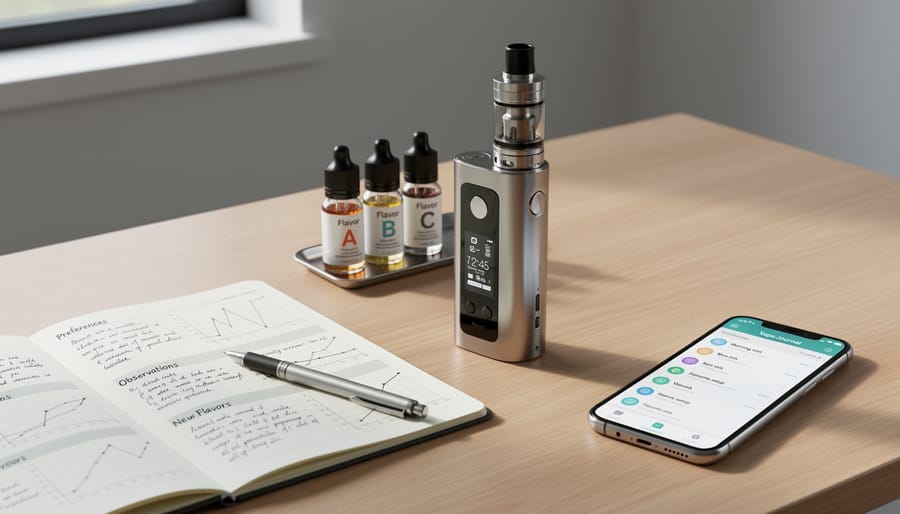
Starting a vaping journal sounds formal, but mine began as random notes in my phone after I couldn’t remember which temperature setting gave me that perfect throat-hit-free experience. Three months later, those scattered observations became my most valuable vaping resource.
Keep it simple at first. After each session, jot down the strain name, device and temperature setting, time of day, and how you felt within the first fifteen minutes and an hour later. Note whether you vaped on an empty stomach or after eating, it matters more than you’d think.
The real learning happens when you spot patterns. Maybe Girl Scout Cookies at 370°F consistently relaxes you without sedation, while the same strain at 410°F knocks you out. Or perhaps certain terpene profiles always trigger your allergies. These connections only become visible when documented.
Don’t overthink the format. A basic spreadsheet works. So does a dedicated notebook. What matters is consistency, not perfection. Even logging half your sessions reveals trends you’d otherwise miss, turning random experiences into reliable knowledge about your personal preferences and responses.
Constructivism: Building Knowledge Through Community

Finding Your Learning Community
Connecting with the right community starts locally. Visit dispensaries where to buy decisions intersect with staff expertise, many host educational events or can point you toward local meetups. I found my most trusted circle through a budtender who ran monthly sessions on vaping techniques.
Online, prioritize communities with active moderation and transparent expertise credentials. Reddit’s focused cannabis vaping forums tend toward honest product discussions over hype. Look for groups where members share detailed experiences, specific temperatures used, effects timelines, strain details, rather than vague endorsements.
Red flags include communities dominated by brand ambassadors, forums where critical questions get defensive responses, or groups pushing unverified health claims. Quality communities welcome skepticism and encourage members to verify information independently.
Start by observing before participating. Notice who provides sourced answers, admits knowledge gaps, and discusses both successes and failures. These voices guide genuine learning far better than curated social media feeds ever could.
Progressive Education: Meeting Vapers Where They Are
Medicinal vs. Recreational Learning Paths
Patients using cannabis medicinally need precision and consistency, not experimentation. Their learning path focuses on understanding specific cannabinoid profiles for symptom management, mastering dosing protocols, tracking therapeutic windows, and recognizing signs of tolerance buildup. A patient managing chronic pain learns to correlate temperature settings with anti-inflammatory terpenes, while someone treating anxiety might study how different CBG effects interact with their medication schedule.
Recreational users typically follow a more exploratory path, prioritizing flavor profiles, effect intensity, and social enjoyment. Their education centers on strain variety, understanding indica versus sativa effects in real-world scenarios, optimizing sessions for different activities, and discovering personal preferences through guided experimentation.
Both paths require foundational safety knowledge, but the depth and focus diverge significantly. Medicinal users benefit from clinical language and research-backed information, while recreational learners respond better to experiential descriptions and social context. Recognizing which path you’re on prevents information overload and targets your learning where it matters most for your specific goals.
Critical Pedagogy: Questioning Marketing and Misinformation
Evaluating Sources: Who Can You Trust?
Start by checking who’s behind the information. Independent reviewers who disclose their testing methods and potential conflicts of interest earn more trust than anonymous accounts pushing specific brands. I learned this the hard way after following advice from what turned out to be a thinly-veiled marketing account, the “unbiased review” led me to an overpriced device that didn’t suit my needs at all.
Look for sources that cite their claims. Does the reviewer explain *why* a particular temperature works better, or do they just assert it? Credible educators reference research, explain mechanisms, and acknowledge what we don’t yet know about cannabis vaping.
Red flags include affiliate links without disclosure, suspiciously perfect reviews, and sources that never critique products. Cross-reference major claims across multiple independent sources. If a supposed “breakthrough” device appears in only one reviewer’s content, stay skeptical.
Prioritize educators who’ve built reputations over time, answer questions transparently, and correct their own mistakes publicly. Trust is earned through consistency and honesty, not flashy production values or aggressive marketing.
Holistic Education: Understanding the Complete Picture
The Mind-Body-Device Connection
Understanding how your body, mind, and vaping device interact creates experiences that go beyond simply inhaling vapor. Your physiology determines how cannabinoids affect you, metabolism speed, lung capacity, and tolerance levels all shape your response. I learned this when switching from smoking to vaping: the same strain delivered completely different effects depending on whether I’d eaten, how stressed I felt, or what time of day I vaped.
Your mental state acts as a filter for cannabis effects. Anxiety or distraction can amplify unwanted sensations, while a relaxed, focused mindset enhances intended benefits. One patient I spoke with discovered her medicinal vaping worked best when paired with breathing exercises before sessions, transforming her pain relief outcomes.
Device settings complete this triangle. Temperature directly influences which cannabinoids and terpenes activate, lower temps around 350°F preserve delicate flavors and provide subtle effects, while 400°F+ delivers stronger, sedating experiences. Matching your device settings to your current physical and mental state turns vaping from random chance into intentional wellness. Track how different combinations affect you, and you’ll discover your personal optimal zones.
These five philosophies aren’t separate paths, they’re interconnected approaches that strengthen each other. Your hands-on experimentation becomes more valuable when you share those discoveries with your community. Critical thinking sharpens when you understand the holistic picture of cannabis science, device mechanics, and personal physiology. Progressive education means recognizing which philosophy serves you best at each stage of your journey.
I’ve watched hundreds of vapers transform from confused beginners into confident, knowledgeable users by combining these approaches. The person who only reads reviews without trying devices themselves misses crucial personal insights. The experienced user who dismisses community wisdom stops growing. The critical thinker who ignores their own body’s responses makes poor decisions despite good information.
Your education doesn’t end with this article. Start your vaping journal tonight. Join online communities and ask questions. Challenge the next marketing claim you see. Consider how your device choice affects your entire experience. Whether you’re consulting our PEI access guide or exploring advanced temperature techniques, bring multiple philosophical lenses to your learning.
When individual vapers become educated consumers, the entire industry improves. Manufacturers respond to informed demand. Retailers provide better guidance. Communities share higher-quality information. Misinformation loses its power. This collective elevation benefits everyone, from first-time medical patients to seasoned enthusiasts.
Your most empowered vaping experience emerges not from following a single approach, but from weaving these philosophies into a personal learning practice that grows with you.